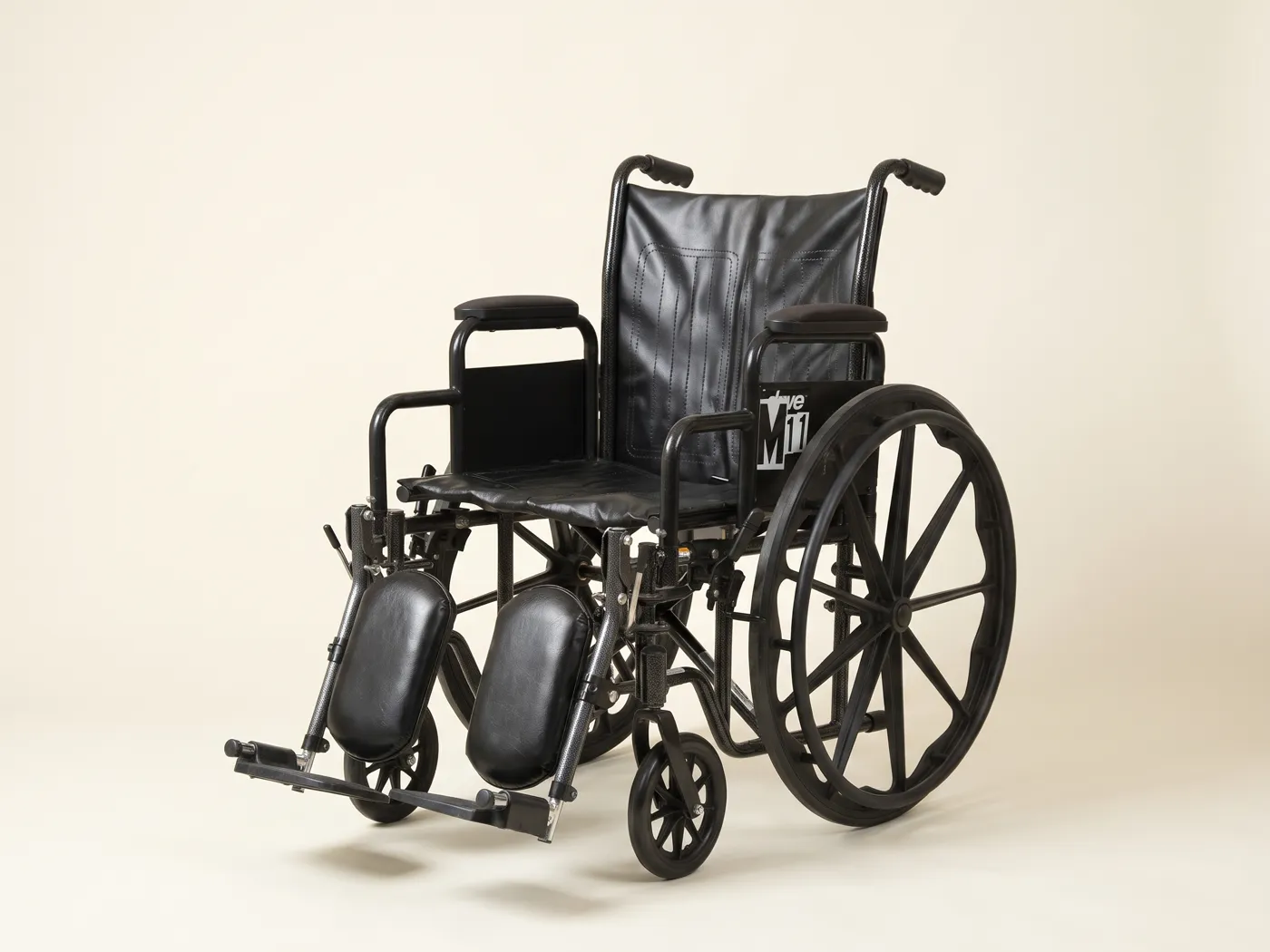
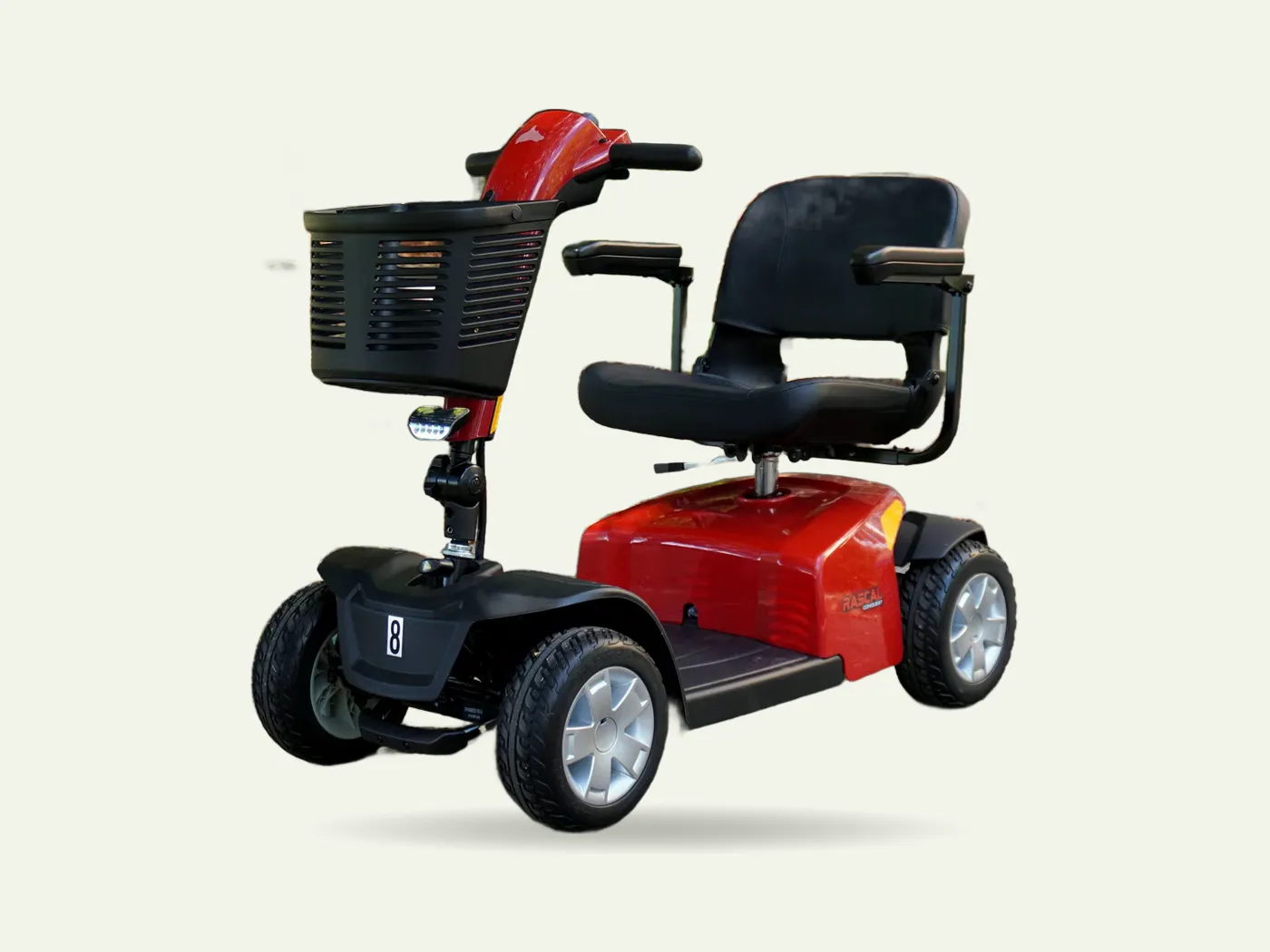
A mobility scooter and a power wheelchair are both electric. Pride Mobility, a maker of both, says they share the same job: helping people who need some assistance get from one place to another. But they steer, sit and turn in different ways, and they suit different people.
This guide explains the differences in plain terms. It covers steering, seating, turning space, where each is allowed and how Medicare looks at them. It ends with what usually makes sense for a short trip or an event.
A note first. We rent equipment. We are not doctors or therapists, and this guide is not medical advice. If you are choosing a device for daily use, start with your doctor or therapist.
Steering: tiller or joystick
The biggest difference is how you drive.
- Mobility scooter. Pride Mobility, a scooter and power chair maker, says scooters are operated with a "tiller" that has handlebars. You steer with your hands and arms.
- Power wheelchair. Pride says power wheelchairs are driven with a joystick on the right or left armrest. Pride says the joystick can be worked with one hand.
Pride also notes that scooter riders need enough upper body strength to steer with their hands and arms. Pride's FAQ adds that your range of mobility in working a device may show whether a scooter or a power chair is best for you.
Seating and support
Seating is the second big difference.
Pride says padded, captain's style seating is standard on its power wheelchairs. The foot platform adjusts for height and flips up when not in use. Pride's FAQ says other seat options may be available on some power chairs.
Scooters, per Pride, typically have vinyl seating that can be adjusted or may swivel. Leg support on a scooter is fixed, though other adjustments can add leg room.
Pride adds that power wheelchair seats are more spacious, with larger seats and armrests, because users typically spend a lot of time in the chair. If the rider needs special seating or support, that is a conversation for a doctor or therapist.
Turning space and where each works best
Pride says power wheelchairs have a smaller turning radius. That helps in tight hallways, bathrooms and kitchens. Pride says scooters have a larger turning radius and are not typically used in tight spaces.
Pride also says many scooters are more rugged and built for outdoor use. It names trips around the neighborhood, down the block or on vacation as popular uses.
So, as a rough rule from the maker:
- Power wheelchair: better indoors and in tight spaces.
- Mobility scooter: better outdoors and over longer distances.
Check the specific unit before you count on it in a small space.
Who each one suits
Every rider is different, so treat this as a starting point. Here is how Pride describes it.
A mobility scooter may suit someone who:
- Has the upper body strength to steer with hands and arms, and can hold their arms out for long periods.
- Gets around the house without help but struggles to walk long distances.
- Does not rely on the scooter as their main way of getting around.
A power wheelchair may suit someone who:
- Lacks the upper body strength to steer a tiller or push a manual wheelchair.
- Needs help with everyday mobility and daily living.
- Uses the chair as their main way of getting around, much of it indoors.
Pride says power wheelchairs are preferred by people who struggle to stay on their feet for long periods. It says scooters are preferred by some people who are in pain. Your doctor or therapist can tell you what fits your needs.
Where each is allowed under the ADA
ADA.gov explains the federal rules on its mobility devices page. It defines a wheelchair as a manual or power-driven device designed mainly for someone with a mobility disability. The page groups manual wheelchairs, power wheelchairs and electric scooters together under that rule.
The page says covered entities, such as businesses, must allow people who use manual or power wheelchairs or scooters into all areas where the public may go.
There is a separate group called "other power-driven mobility devices." ADA.gov gives golf cars and Segways as examples. For those, a business may weigh things like the device's size and speed, the foot traffic and safety before deciding where they can go.
Medicare and long-term equipment
Buying a scooter or a power wheelchair for daily use is a medical decision. Medicare.gov explains how Part B handles it:
- Part B covers power wheelchairs and scooters only when they are medically necessary.
- You must have a face-to-face exam and a written prescription from a treating provider.
- Some power wheelchairs may need prior approval, called prior authorization.
- Medicare only pays when the supplier is enrolled in Medicare.
- After you meet the Part B deductible, you pay 20% of the Medicare-approved amount.
If you need a device every day at home, start with your doctor. Pride also says the best first step is an exam with your physician.
For a short trip or event: a scooter or a push wheelchair
A trip, a family visit or a day at a fair is a different need. You need help for a few days, not for years. That is where a rental fits.
Our rental fleet is scooters and push wheelchairs. They cover two short-term needs:
- Mobility scooters. We rent 3-wheel and 4-wheel electric scooters. They help guests cover large fairgrounds and market campuses at their own pace. The maximum passenger weight is 400 lbs.
- Push wheelchairs. A companion pushes. We offer more than one size. Leg lifts and foot rests may be available.
A scooter suits a rider who can steer it with hands and arms. A push wheelchair suits a rider who will have someone with them to push. Our guide on choosing a scooter or a wheelchair walks through those questions in more detail.
A few rules apply to every rental:
- Only the person named on the rental may ride, one person at a time.
- Our staff show you the controls before you go.
- Our staff cannot lift or transfer guests. Bring someone who can help if you need it.
For personal dates in the Triangle, quotes are personal and there is no price list. A person calls you back within 24 hours to confirm the dates, the equipment and pickup or delivery. Delivery is confirmed for each request. At events, see our event rentals for where to find our tent.
New to scooters? Read before you rent a mobility scooter for questions on range, curbs and transport.
Next step
Tell us who is riding, your dates and where you are going. We go over the scooter and wheelchair options and what is free. Ask for a quote or call (919) 533-8846.